
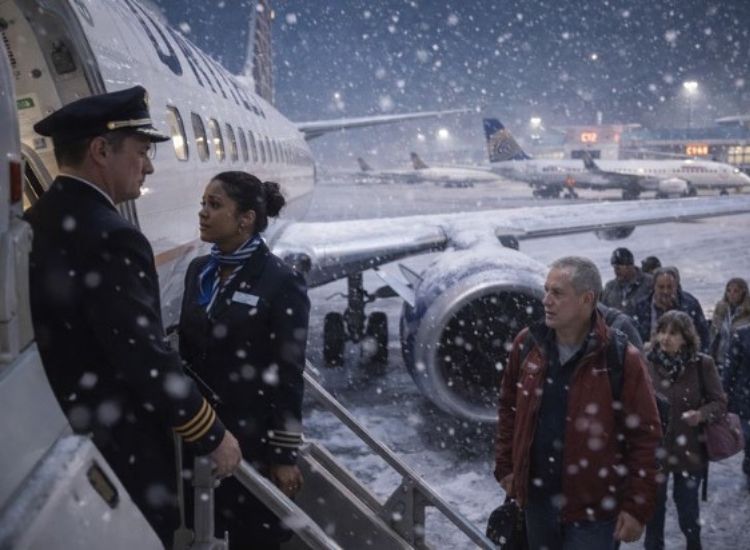
Crew fatigue limits at Chicago O’Hare highlight why delays can be a sign of responsible aviation management.
Chicago, Illinois, US, 2 January 2026 – During one of the most difficult holiday travel periods in the United States, a safety-focused decision at Chicago O’Hare International Airport captured attention across the travel and aviation industry. A domestic flight operated by United Airlines was halted after flight attendants reached their maximum allowable duty time, underscoring the importance of fatigue management during peak travel disruptions.
The incident occurred as severe winter weather swept across parts of the Midwest and Northeast, triggering widespread flight delays and cancellations. With thousands of travelers affected, airlines were under intense pressure to keep operations moving. Yet in this case, safety and crew well-being took priority over schedule recovery.
Winter storms strain holiday travel.
Snow, ice, and strong winds disrupted airport operations during the Christmas travel rush, especially at major hubs. Chicago O’Hare, one of the busiest airports in the country, experienced heavy congestion as airlines worked to reroute aircraft and crews while managing packed terminals.
For United Airlines, which maintains a major hub at O’Hare, short domestic flights quickly turned into long and uncertain journeys. Passengers expecting smooth connections instead faced repeated delays as weather conditions continued to worsen.
A short flight becomes a long night.
One United Airlines Boeing 737 was scheduled for a brief domestic trip of about 40 minutes. However, after hours of delays, boarding did not begin until close to midnight. By that time, the flight attendants assigned to the aircraft had reached the legal limit of their duty hours.
These limits are set to prevent crew fatigue and ensure that flight attendants remain alert and capable of responding to emergencies. Once the threshold is reached, continuing a flight would violate safety regulations.
Why duty time limits matter
In the United States, the Federal Aviation Administration enforces strict rules on crew duty time. Depending on staffing and scheduling, flight attendants may work up to 14 hours, but only if they remain fit for duty.
Fatigue is a serious risk in aviation. When crews become exhausted, reaction times slow, and decision-making can suffer. In this case, it was clear that the crew could not safely continue, making cancellation the only responsible option.
A firm decision at the gate
As ground staff searched for replacement crew members, the situation grew tense. Ultimately, the pilot in command decided to end the operation and deplane passengers. While this added frustration for travelers already facing delays, it ensured full compliance with safety standards.
The aircraft did not depart, and passengers were escorted back into the terminal. The decision reinforced the principle that safety cannot be compromised, even during high-pressure holiday operations.
Passenger reaction and wider impact
Although delays are rarely welcomed, at least one passenger publicly praised the crew and flight leadership for prioritizing safety and well-being. The response resonated widely, reminding travelers that delays often reflect responsible decision-making rather than poor service.
The moment highlighted the human side of air travel, showing how crew fatigue, leadership, and regulations directly shape passenger experience.
What this means for travel and tourism
For the travel and tourism sector in the USA, the incident serves as an important reminder. While delays can disrupt plans, they also demonstrate the safeguards built into the aviation system. Enforcing crew duty limits protects lives, maintains trust, and supports long-term confidence in air travel.
During peak seasons, airlines must balance efficiency with responsibility. This event showed that when the two conflict, safety must always come first.
A lesson in modern aviation
Aviation relies not only on technology but also on people. Recognizing human limits is essential for safe operations. By respecting fatigue boundaries, airlines protect both passengers and crew members.
As holiday travel continues to test airline networks, decisions like this reinforce why delays, though inconvenient, are often signs that the system is working as intended.

Latest News





Hospitality Business Outlook is the premier source of insights, trends, and innovations shaping the global hospitality industry. Our magazine is dedicated to showcasing top hospitality companies, breakthrough technologies, and industry leaders who are redefining guest experiences and operational excellence.
We respect your privacy. The email address you provide will be used solely for subscription purposes and will not be stored or shared.
Subscribe Now